A PackCube plywood pallet engineering case study
Project Overview
PackCube designed and built custom plywood pallet prototypes for the customer’s actual application. The customer placed real goods on the pallets and used them over a period of time. Mass production began only after the customer confirmed that the prototypes had passed the on-site trial. The finished pallets have since been shipped.
Project workflow: Customer requirements → Design → Prototyping → On-site trial and validation → Customer approval → Mass production → Delivery.
1. Customer Requirements and Project Background
The project began with the customer’s requirements for supporting and using their actual goods. PackCube translated these requirements into a plywood pallet design, then built prototypes for validation at the customer’s facility.
2. Pallet Structural Design
The pallet design combines layered plywood decks and supporting blocks with openings for handling access. Product support positions, load distribution, and handling conditions guide the configuration so that it fits the customer’s packaging application.
3. Plywood Component Processing
PackCube processed plywood panels with woodworking equipment to prepare pallet components. Component preparation supported the subsequent positioning and assembly of the decks and support blocks according to the design.
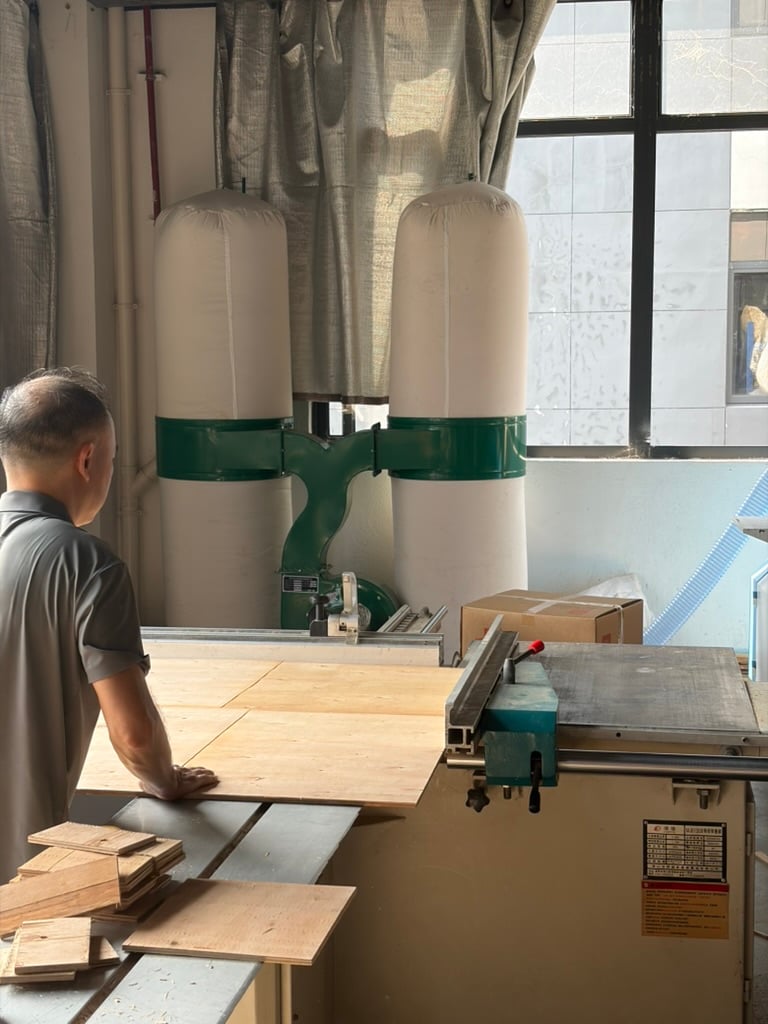
Plywood panel processing at the PackCube workshop.
4. Prototype Fabrication and Assembly
PackCube built pallet prototypes based on the structural design. After preparing the components, workers positioned the decks and support blocks and used mechanical fastening equipment to assemble physical pallets for the customer’s trial.
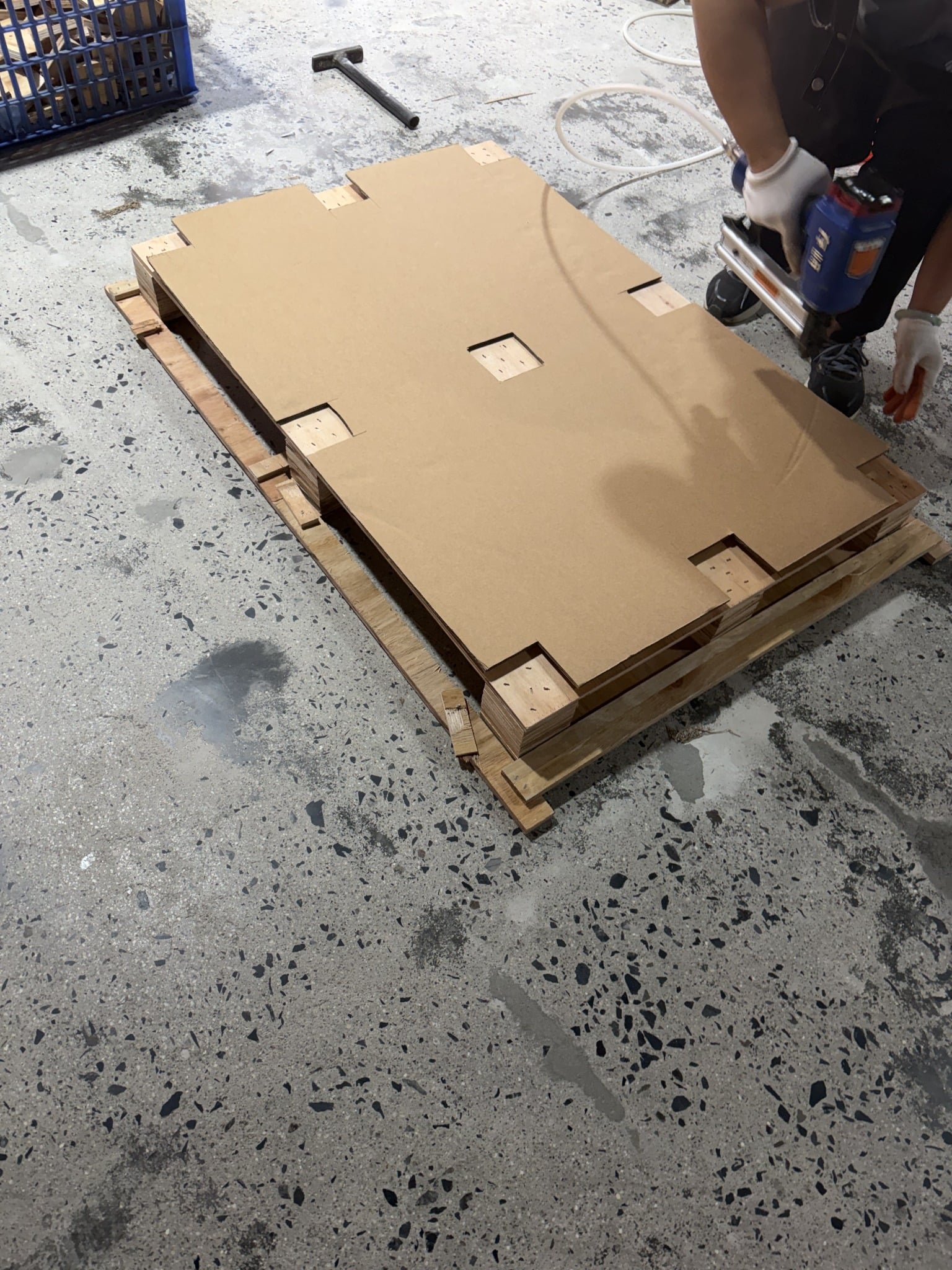
Worker fastening plywood pallet components during assembly.
5. Prototypes at the Customer’s Facility
The customer used the plywood pallet prototypes made by PackCube to support actual goods at their facility. Continued use under practical conditions provided a basis for confirming whether the design met the project’s application requirements.
6. Customer Trial and Real-World Application Validation
The customer placed actual goods on the plywood pallets made by PackCube and continued using them over a period of time to observe product compatibility and performance in the intended application.
After the on-site trial passed, the customer confirmed that the prototypes met the project’s requirements. PackCube then proceeded to mass production, and the finished pallets have since been shipped.
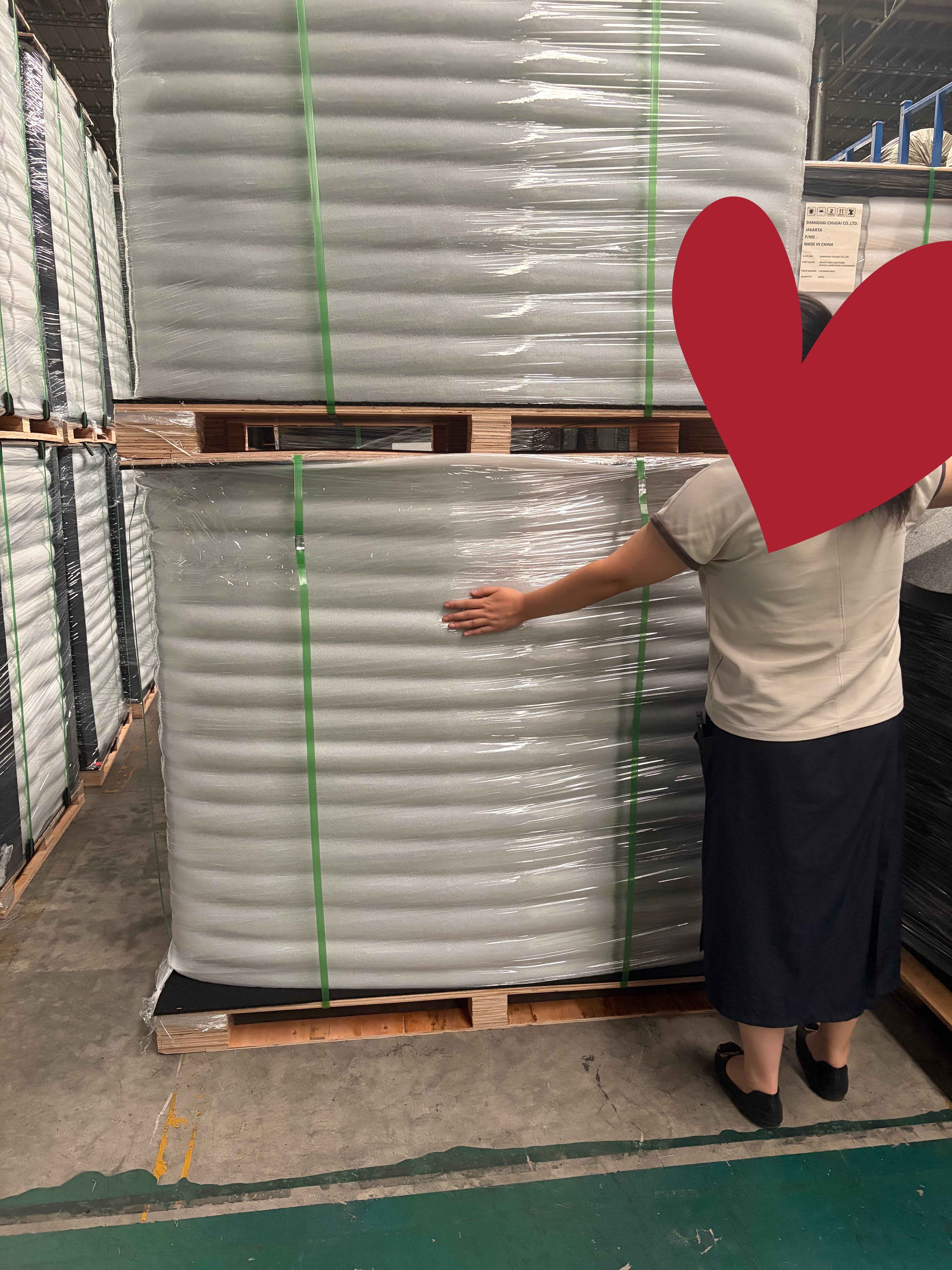
Customer On-Site Trial and Validation of PackCube Plywood Pallets
7. Mass Production and Delivery After Customer Approval
Following customer approval of the validated prototypes, PackCube carried out mass production using the confirmed pallet design. Completed pallets were stacked at the workshop, grouped, and moved to the loading area. The finished pallets have been shipped, completing the workflow from customer requirements and design through prototyping, on-site validation, production, and delivery.
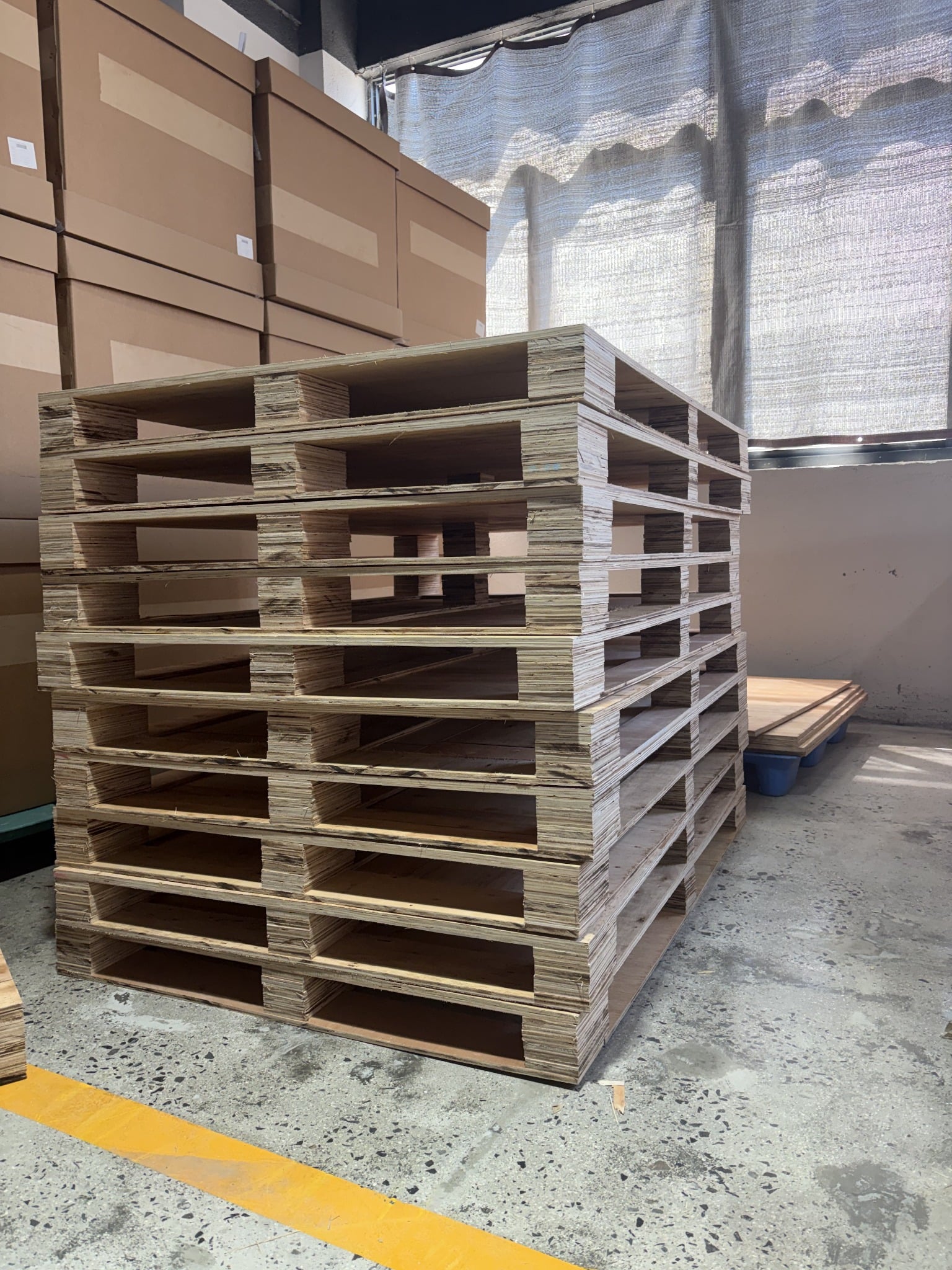
Finished plywood pallets stacked in the production area.
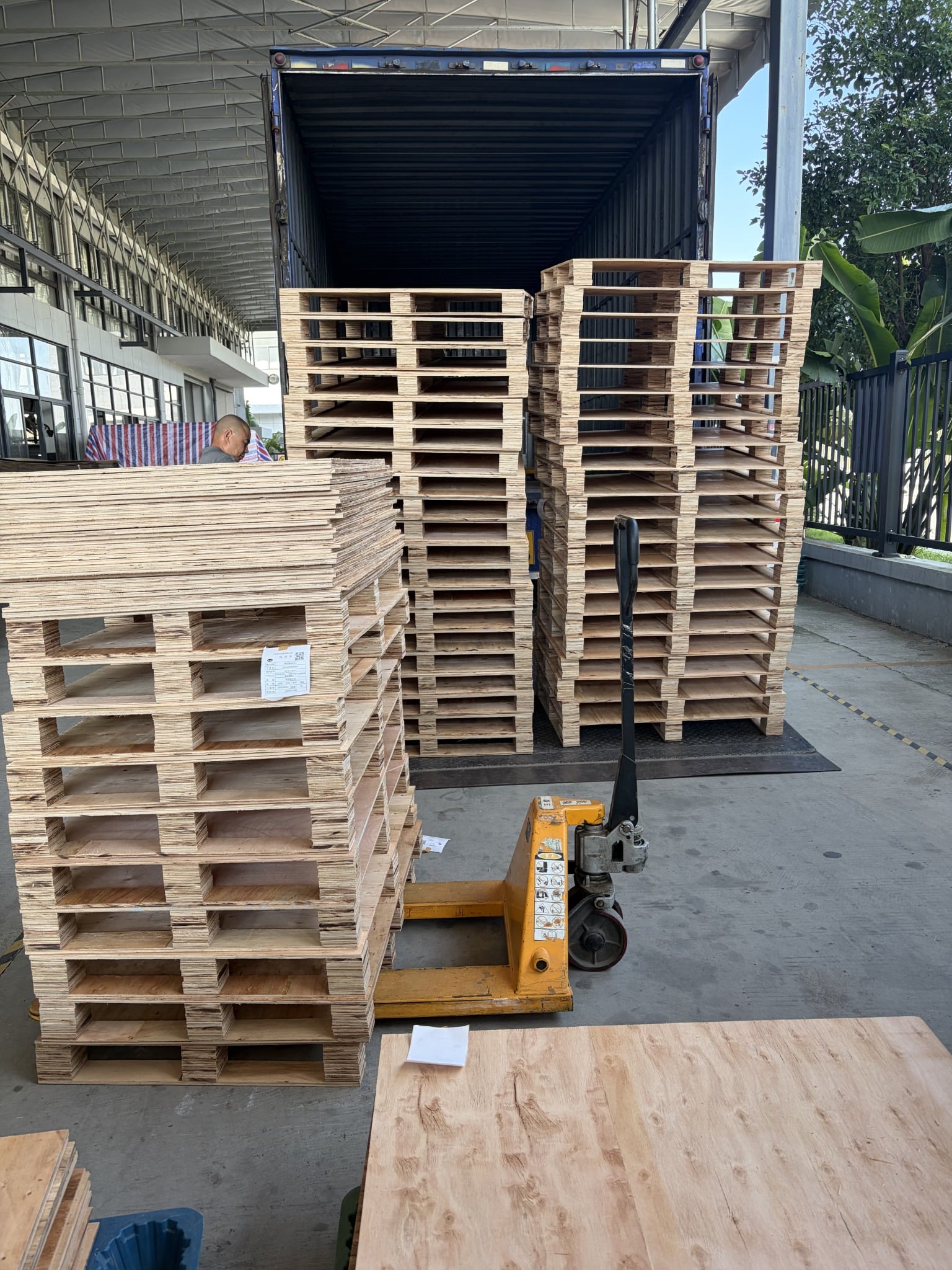
Multiple stacks of plywood pallets at the loading area.
8. Why Custom Plywood Pallets?
Custom configurations allow deck dimensions, support arrangements, and handling access to be considered together with the packaged product. They may be integrated with industrial corrugated packaging, protective inserts, or other shipping systems. Final selection requires assessment of material specification, load distribution, transport environment, and any applicable destination requirements.
9. Frequently Asked Questions
What are plywood pallets used for?
Plywood pallets support packaged goods during storage, material handling, and transport. Suitability depends on weight, load distribution, handling method, and shipping conditions.
Can plywood pallets be customized for industrial equipment?
Yes. Dimensions, support-block layout, and deck configuration can be adapted to product and handling requirements, subject to structural evaluation.
How are custom plywood pallets manufactured?
In this project, PackCube first designed and built prototypes. The customer placed actual goods on the pallets and used them over a period of time. After the customer confirmed that the trial had passed, PackCube proceeded to component processing, structural assembly, and mass production, followed by shipment.
How do plywood pallets differ from solid wood pallets?
Plywood pallets use engineered wood panels or components; solid wood pallets primarily use lumber. Material behavior, construction, cost, and shipment requirements should be assessed for each application.
What information is needed for a custom plywood pallet?
Provide product dimensions, gross weight, load distribution, pallet footprint, handling equipment, stacking needs, transport method, and destination market.
10. Work With PackCube
PackCube Group develops and manufactures custom industrial packaging, including plywood pallets, wooden crates, heavy-duty corrugated packaging, and protective packaging systems. Share your product specifications and logistics requirements to discuss an appropriate pallet design.

 EN
EN